CVAI 2026 Speaker
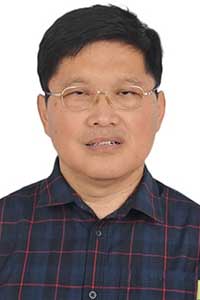
Prof. Wanquan Liu
IEEE Senior Member
(Keynote Speaker)
Sun Yat-sen University, ChinaSpeech Title:Investigations on Supervised Learning and Weakly Semi-Supervised Learning with Applications on Medical Image Segmentations
Abstract: Medical image segmentation is a fundamental problem in computer aided diagnosis, whose performance heavily relies on large amounts of high quality pixel level annotations that are costly and difficult to obtain in clinical practice. To address this challenge, this work systematically investigates supervised learning and weakly semi supervised learning methodologies for medical image segmentation. Under the fully supervised setting, we focus on the complex appearance, ambiguous boundaries, and large inter domain variations commonly observed in endoscopic images, and propose a label consistent augmentation framework that integrates generative modeling with strict pixel level supervision, enabling effective expansion of appearance diversity while preserving geometric and semantic consistency. This design significantly improves generalization across multi center and multi device endoscopic datasets. Furthermore, to reduce annotation dependency, we study weakly semi supervised segmentation with point level supervision and introduce a point neighborhood learning paradigm that explicitly exploits reliable local structures around sparse annotations, transforming extremely weak supervision into effective training signals. By combining neighborhood based supervision, pseudo label quality control, and a teacher student framework, the proposed approach mitigates noise and bias inherent in weak supervision. Extensive experiments conducted on multiple endoscopic datasets, including nasal and gastrointestinal endoscopy, demonstrate consistent performance gains under different supervision regimes, highlighting the robustness and cross dataset generalizability of the proposed methods and their potential for practical clinical deployment.
Brief Bio: Dr Wanquan Liu (Senior Member, IEEE): He is a Professor in the School of Intelligent Systems Engineering at Sun Yat-sen University. He received the B.Sc. degree in Applied Mathematics from Qufu Normal University, P.R. China, in 1985; the M.Sc. degree in Control Theory and Operation Research from Chinese Academy of Sciences in 1988, and the Ph.D. degree in Electrical Engineering from Shanghai Jiaotong University, Shanghai, P.R. China, in 1993. He once held the ARC Fellowship from Australian Research Council, U2000 Fellowship from the University of Sydney and JSPS Fellowship from Japan and attracted research funds from different resources. He has published over 400 papers in reputed journals and international conferences with more than 8000 citations. He is the Editor-in-Chief for the journal Mathematical Foundations of Computing and serves on the editorial board of several international journals. His research interests include machine learning, intelligent control, and smart home for the aged care. <Personal Webpage>
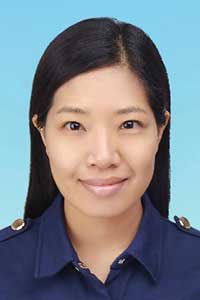
Assoc. Prof. Jingjing Liu
(Keynote Speaker)
Shanghai University, ChinaSpeech Title:Multimodal Compound Eye Computational Imaging Technology
Abstract: Traditional optical imaging systems are constrained by the physical limitations of a single modality, and there are inherent contradictions in terms of field of view, depth of field, dynamic range, and multi-dimensional information acquisition. Inspired by biological compound eyes, this project studies a multimodal compound eye computational imaging technology. By constructing a bionic curved detector array composed of various types of sub-eyes (such as microlens arrays with different focal lengths and spectral responses), this technology realizes high-dimensional and large-field-of-view sparse sampling of target scenes. Combined with deep learning-driven multimodal computational imaging algorithms, it breaks through the geometric aberration limitations of traditional optical systems, and can simultaneously reconstruct high-quality images with high resolution, large depth of field, and three-dimensional spatial information. This technology has subversive advantages in wide-area target detection and complex dynamic perception, and its breakthrough will establish an independently controllable underlying architecture and foundation for China's hundreds-of-megapixel video industry and a new generation of intelligent machine vision technologies.
Brief Bio: Liu Jingjing is an Associate Professor at the School of Microelectronics, Shanghai University. She was a postdoctoral fellow at the State Key Laboratory of Application Specific Integrated Circuit and System, Fudan University. Her research focuses on video imaging and AI chip design. She has led more than 10 projects including the National Natural Science Foundation for Young Scholars and Shanghai Natural Science Foundation, published over 60 academic papers, and filed more than 15 invention patents. She received the First Prize of Shanghai Technological Invention Award. <Personal Webpage>